




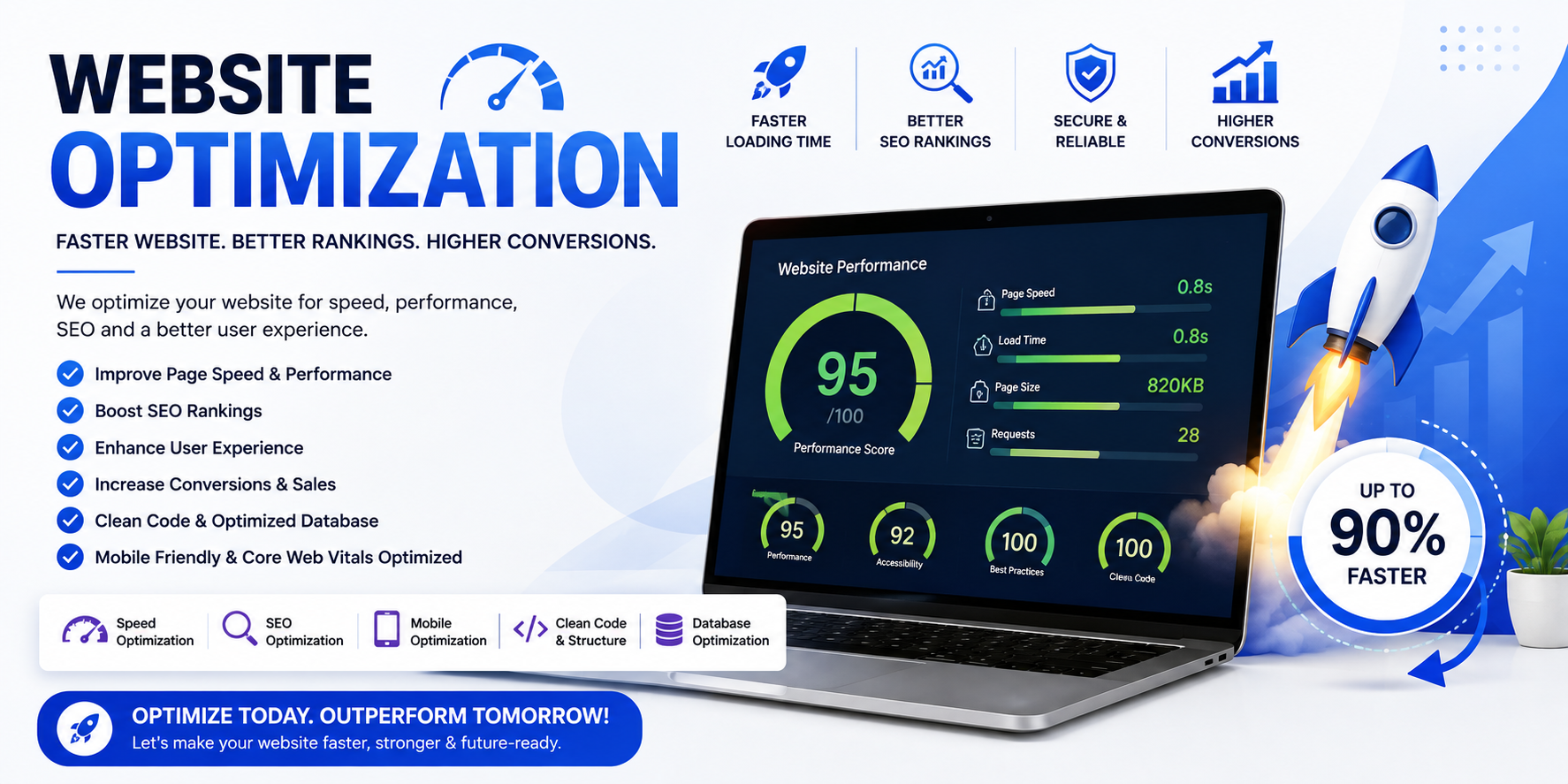
Website Optimization Services
Boost Rankings • Improve Speed • Increase Conversions
SEO Higher search rankings on Google and other search engines
Speed Faster page loading speed for better user experience
Mobile Mobile-friendly design that works on all devices
Traffic More organic traffic from search engines
Leads Better conversions and leads through improved usability
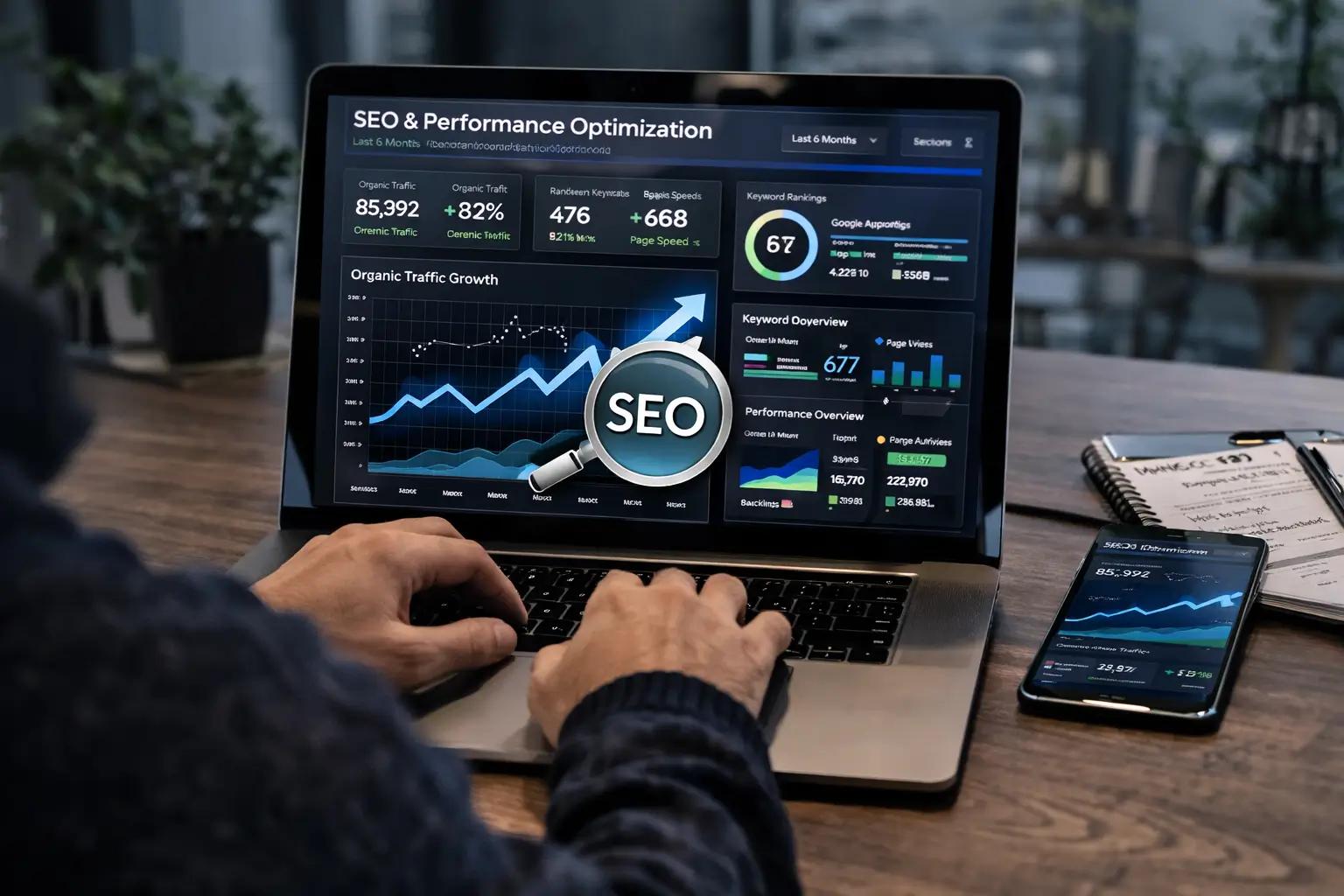
Our Website Optimization
Services
On-Page SEO Optimization
Optimize page titles, meta descriptions, headings, URLs, and content with targeted keywords to improve search visibility.
Website Speed Optimization
Reduce loading time through image compression, caching, code minification, and performance improvements.
Mobile Optimization
Ensure your website is fully responsive and performs perfectly on smartphones and tablets.
Technical SEO
Fix crawl errors, improve site structure, create XML sitemaps, and ensure proper indexing by search engines.
Content Optimization
Create high-quality, keyword-rich, and engaging content that attracts users and search engines.
User Experience (UX) Improvements
Improve navigation, readability, layout, and call-to-action placement to increase engagement and conversions.
Image Optimization
Images are compressed and delivered in modern formats without noticeable quality loss.
Performance Enhancement
We improve Core Web Vitals such as LCP, CLS, and INP for a better user experience and SEO performance.
Technical SEO Audit
We identify and fix crawl errors, broken links, duplicate content, indexing issues, and other technical SEO problems.
Components of SEO
Keyword Research
Identifying relevant keywords and phrases that users might use when searching for content related to your website. Tools like Google Keyword Planner, SEMrush, or Ahrefs can assist in this process.
On-Page SEO
Optimizing individual web pages to improve their search engine rankings. This includes optimizing title tags, meta descriptions, headings, content, images, URLs, and internal linking structures.
Off-Page SEO
Activities carried out outside the website to improve its rankings. This involves building quality backlinks from other reputable websites, social media marketing, influencer outreach, and guest blogging.
Technical SEO
Optimizing the technical aspects of a website to enhance its crawlability, indexability, and overall performance for search engines. This includes ensuring proper site structure, improving site speed, implementing schema markup, creating XML sitemaps, and optimizing for mobile-friendliness.
Content Quality
Creating high-quality, relevant, and valuable content that meets users' needs and interests. Engaging and informative content tends to attract more traffic and encourages backlinks.
User Experience (UX)
Ensuring that the website provides a positive and seamless user experience. This involves easy navigation, mobile responsiveness, fast loading times, and intuitive design.
Local SEO
Optimizing a website to appear in local search results, especially for businesses targeting local customers. This includes optimizing Google My Business profiles, local citations, and acquiring reviews from local customers.
Monitoring and Analysis
Continuously monitoring website performance using tools like Google Analytics and Google Search Console. Analyzing data helps in understanding user behavior, identifying areas for improvement, and adapting strategies accordingly.
Algorithm Updates
Staying updated with search engine algorithm changes (e.g., Google's updates like Panda, Penguin, BERT) and adjusting strategies to remain compliant and competitive within the evolving search landscape.
FAQ
What is website optimization?
Website optimization refers to the process of improving the performance of a website to achieve better user experience, higher search engine rankings, and increased conversion rates. This involves various techniques, including improving site speed, enhancing mobile responsiveness, and optimizing content for search engines (SEO).
What is Conversion Rate Optimization (CRO)?
Conversion Rate Optimization involves improving the website to increase the percentage of visitors who complete a desired action (conversion), such as making a purchase, signing up for a newsletter, or filling out a contact form. This can involve A/B testing, improving calls-to-action, and simplifying the user journey.
How often should I optimize my website?
Website optimization should be an ongoing process. Regularly review and update your site based on performance metrics, user feedback, and changes in technology and search engine algorithms.
By following these guidelines and continuously monitoring and adjusting your approach, you can ensure that your website remains competitive and provides an excellent user experience.
What are the basic steps to developing an e-commerce site?
- Improved User Experience: Faster, more responsive websites provide a better experience for visitors, reducing bounce rates and increasing engagement.
- Higher Search Engine Rankings: Optimized websites rank higher in search engine results, making them more visible to potential visitors.
- Increased Conversions: Well-optimized websites guide visitors more effectively towards taking desired actions, such as making a purchase or filling out a contact form.
Have a project or idea?
We’d love to build something great together. Tell us about your vision and let’s
make it happen.